 The Linux Foundation’s Dronecode Project is hosting a workshop in Dublin, Ireland on Oct. 5, as well as a Flight Day event at a nearby airport on Oct. 8, to showcase open source Unmanned Aerial Vehicle (UAV) technology. These events bookend LinuxCon + CloudOpen + Embedded Linux Conference Europe, which is being held Oct. 5-7 at Conference Centre Dublin.
The workshop will be led by Lorenz Meier, PX4 Project lead, and Tully Foote Platform Manager for ROS (Robot Operating System). Meier will demonstrate a PX4 Flight Dronecode stack running on Linux in simulation. The hands-on workshop will also cover toolchain setup using a supplied VM/docker image, as well as driving an electric servo motor with a PX4/Pixhawk autopilot. Foote, meanwhile, will show how Dronecode can interface with ROS.
At the Flight Day event, participants are invited to bring their own UAVs and apply the knowledge learned from the workshop. Prizes will be awarded for various flight challenges, and academic research groups will showcase their projects alongside companies like 3D Robotics’ (3DR) and Parrot.
The Dronecode Project was launched in Oct. 2014 with the goal of uniting open source drone projects and assets and providing a common codebase to help accelerate software development. The project spans from microcontroller-based drones running real-time operating systems like Nuttx to new Linux-driven hybrid designs run that also incorporate RTOSes.
The project, which is governed by the Dronecode Foundation, has made substantial progress in standardizing foundational stacks, and several, mostly Linux-based, UAVs aligned with Dronecode have reached market. New members, such as Parrot, Walkera, and Erle Robotics, have brought the membership to 44, comprising 1,300 active developers.
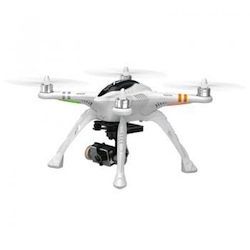 The new companies join Platinum members 3DR and Yuneec, Gold members Intel and Baidu, and Silver members including Qualcomm, Box, ProDrone, Falcon Unmanned, and others. Earlier this year, Erle Robotics launched a Dronecode-aligned Erle-Copter in Ubuntu and Ubuntu Snappy flavors, and Walkera launched the 2015 QR X350 Pro, which features a Linux-driven Dronecode flight controller.
The Dronecode Project builds upon two closely related open source drone autopilot platforms, APM/ArduPilot UAV platform, and the PX4 project based at the Swiss Federal Institute of Technology, Zurich.
According to workshop leader Lorenz Meier, the core developer and maintainer of the Pixhawk PX4 Flight Stack software, as well as a Ph.D student at the Computer Vision and Geometry Group in the Department of Computer Science at ETH Zurich, the Dronecode Project is moving from developing basic autopilot flight stacks to addressing higher end functions.
“So far, we have focused on getting the Dronecode flight stacks into industry-ready shape,” says Meier. “While GPS-based flight is in a pretty good shape now, we have set out to tackle the next challenges like obstacle detection and avoidance and tighter integration into the cloud, which would allow dynamic no fly zones. The goal is to make flying easier and safer at the same time.”
“Mid-2016 will be a good time to look at Dronecode and Linux adoption, as companies will have had the opportunity to phase in new technology,” says Meier.
I asked Meier about the rapid transition toward Linux, and whether Linux will soon be able run a drone on its own without a companion microcontroller/RTOS control system.
“Hard-realtime Linux is still a specialized solution, making RT-Linux somewhat hard to integrate based on standard distributions,” says Meier. “We opted instead for a hybrid solution running standard Ubuntu / Debian Linux and a dedicated RTOS side-by-side. The PX4 flight stack that runs on Snapdragon Flight uses Linux for higher end functions, but uses Qualcomm’s QuRT for all safety-critical parts running on the Snapdragon 801’s Hexagon DSP. Similarly, the APM-based 3DR Solo runs Yocto based Linux image, but also runs all safety-critical software on a co-located Pixhawk running NuttX and the PX4 middleware for sensor interfacing.”
I also asked Meier about the integration of Dronecode technology with ROS, which was designed for terrestrial robots, but is increasingly being used on drones such as the Erle-Copter.
“ROS is a great rapid prototyping environment and ROS 2.0 is moving in the right direction to become more of a drone platform,” says Meier. “However, right now neither we nor Qualcomm or other industry adopters base the PX4 stack on it. In addition to offering ROS, we have a DSP-to-Linux IPC mechanism called muORB for messaging as a lightweight alternative. However, the PX4 middleware has a transparent adapter layer for ROS, though, so people can run our apps in a native ROS environment. Dronecode also has a MAVLink to ROS bridge called mavros.”
Irish Drone Community Gains Spotlight
A major goal of the workshop and Flight Day is to support the emerging UAV industry in Ireland, a country whose rugged coastline and castle-dotted hills have attracted filmmakers using drones. Both events are sponsored by Atlantic Bridge, IDA Ireland, and Startup Ireland, in addition to 3DR and the Dronecode Foundation.
Ireland has taken an early lead in establishing regulations that legalize safe drone usage. A hobbyist drone community is emerging around organizations like Copter Shop Ireland and the iFly Technology training center. UAV-related companies based in Ireland include Green Aviation, Verifly, and SkyTec Ireland.
“Dronecode provides an ideal collaborative technology platform to foster rapid adoption and growth for the drone industry in Ireland,” says Trishan de Lanerolle, Program Manager for the Dronecode Foundation, as part of the Linux Foundation’s Collaborative Projects team.
At the Flight Day event, several University research groups will be showcasing their projects alongside companies like 3DR and Parrot. De Lanerolle says, “From a regulation point of view the Irish Aviation authority has a progressive approach and wants to promote innovation in this space.”
In the U.S., meanwhile, there’s a growing campaign for self regulation by vendors and users as a means to forestall potentially more restrictive FAA regulations. In a recent Hackaday post, 3DR CEO Chris Anderson notes safety-oriented Dronecode projects including Dronecode No Fly Zones and a related Safe Flight API.
As drone vendors and users come under fire for unsafe flying practices and invasions of privacy, it’s important to note the many benefits of UAV technology, from improved agricultural practices to search and rescue and disaster relief. The Dronecode events will highlight the increasing number of humanitarian projects involving drones, including Uplift Aeronautics and OpenRelief. Other efforts include UAViators, which helps aid organizations safely use drones for relief efforts. Drones are also used by the World Wildlife Foundation to track wildlife and poachers in Africa.
The Drone Developer Workshop ($10) will be held Oct. 5, 2-6pm at the Spencer Hotel in Dublin, Ireland. (bring your own laptop). Flight Day ($10) is scheduled, weather permitting, for Oct. 8, 9am to 4:30pm, with transportation provided to an airfield near Dublin. More information and registration may be found here.



 1) The Chinese government encourages citizens to replace Windows with a Linux-based OS.
 BlackBerry has been teasing us with its plans for an Android-powered slider smartphone for months,
  As a preview to the upcoming
 The openSUSE Project announces openSUSE Leap 42.1 Beta operating system has been released and is now available for download and testing.