S3TC remains the most common form of texture compression relied upon by video game developers and others, but it remains a legal mess for open-source graphics drivers. ETC2 texture compression isn’t faced by legal issues but was only mandated by OpenGL ES 3.0 / OpenGL 4.3, which makes it less well adopted. Meanwhile, in looking forward to the future, ASTC is the royalty-free next-gen texture compression solution that’s backed by the Khronos Group. Intel’s forthcoming Skylake hardware will make ASTC a much more widespread reality…
20 Years of Qt
Lars Knoll marks the 20th anniversary of the Qt toolkit on the Qt blog. “From the beginning, Qt has been released with both open source and commercial licensing options. Over the years, we have worked on expanding this model, and nowadays, Qt is actually developed as an open source project. In this sense Qt is actually in a rather unique position, having a strong ecosystem with passionate people, as well as a commercial entity behind it, which backs up and funds most of the development.“
Another HTTPS Vulnerability Rattles The Internet
Another HTTPS vulnerability has started to make its rounds earlier this morning. Dubbed Logjam by its researchers, the vulnerability stems from the US’s encryption export mandate back in the 1990s. This particular vulnerability, in the transport-layer security layer protocol, breaks the Diffie-Hellman perfect forward-secrecy. Susceptibility to the vulnerability is depended on servers and clients supporting the DHE_EXPORT encryption scheme, or using a key less-than-or-equal to 1024 bits…
Looking to install Linux, but don’t know which make(?)
Hello Linux Users,
I’m currently running my laptop (note laptop, I couldn’t see a laptop option on details) on windows 8. I’ve decided to change my OS to Linux, however I don’t know which one to use. I need one that is user friendly and has a nice user interface. I was thinking about getting ubuntu but I wasn’t too sure.
I am coming to the forums for help finding a OS that is good for my personal needs. So if you decide to help me, here is a list of things that I require:
A easy-to-use interface, preferably a hot bar, like the Ubuntu desktop.
Nice clean software, no windows vista like, clunky, boxy, interfaces.
A system that I can easily play games on (steam games.)
Something that will allow me to multitask smoothly.
Another non-essential feature is a coherent source code that I can easily access and modify.
Thanks in advance
Lewis 🙂
LibreOffice 5.0 Open-Source Office Suite Has Been Branched
LibreOffice 5.0 is the next version of this popular, cross-platform, open-source office suite and not LibreOffice 4.5 as was originally planned. LibreOffice 5.0 has now been branched in Git with the trunk development now focusing on LibreOffice 5.1…
NeocoreGames Is No Longer Porting Its Games to Linux
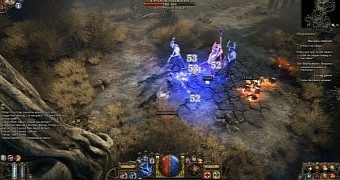
The NeocoreGames studio confirmed the fact that it’s no longer trying to port its games on the Linux platform, even if they were already working on the Beta version for The Incredible Adventures of Van Helsing.
Many studios are choosing to port their games to the Linux platform, but it looks like NeocoreGames is no longer one of those studios. It’s not clear why they are no longer trying to port The Incredible Adventures of Van Helsing or any of the other titles, but it loo… (read more)
IT Workers Report Significant Decrease in Stress Levels
When on vacation, 83 percent of senior-level IT professionals say they are not expected to provide any availability, up from 30 percent in 2014.
Hackathons 101: How to Hack Your Way to the Top
Bill Johnson provides some do’s and don’ts that could help you win your next hackathon.
OpenStack: Ready for More Enterprise Adoption?
Forrester Research acknowledges the issues with OpenStack in enterprise cloud deployments but tells companies to suck it up and jump on the bandwagon.![]()
Huawei Launches 10KB LiteOS to Power the Internet of Things
![]()
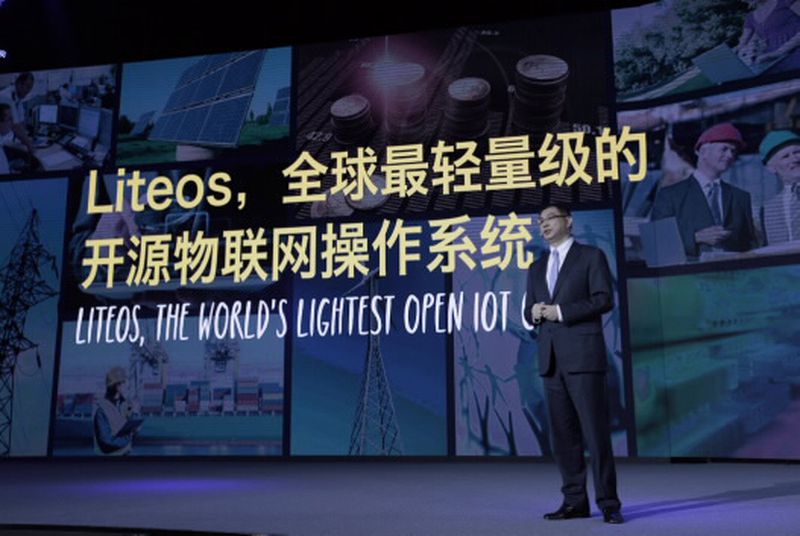
Chinese telecoms giant Huawei is preparing to launch an operating system for the internet of things that’s just 10 kilobytes in size. The company says that its “LiteOS” is the “lightest” software of its kind and can be used to power a range of smart devices — from wearables to cars. Huawei predicts that by 2025 there will be roughly 100 billion internet-connected devices in the world, with two million new sensors deployed every hour. The company also said that the OS would be “opened to all developers” to allow them to quickly create their own smart products — although it’s unclear whether this means that LiteOS will be fully open-source. Huawei says LiteOS also supports “zero configuration, auto-discovery, and auto-networking.”
“We…