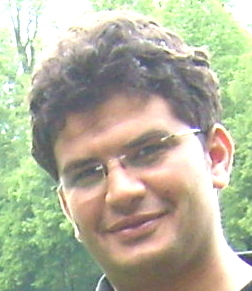
Linux Foundation Training scholarship winner Abdelghani Ouchabane is a senior software developer at eZono, a medical device startup in Germany that uses Linux to build its software and systems. He’s worked on a range of Linux projects over the past five years in this job, including kernel module and driver configuration, system and server configuration, and networking, he said. He’s also contributed to many open source projects including Fedora, CentOS, Ubuntu, Meego, Tizen and Debian.
He applied for a training scholarship for the same reason he is a Linux Foundation individual member: to help improve his system administration skills and to be more involved in the open source community. As a scholarship winner in the “SysAdmin Super Star” category, announced earlier this year, he also plans to share his new knowledge within his company.
“I believe that Linux training will let me learn from the right experts, so I will get the latest techniques and knowledge in Linux,” Ouchabane said. “I will transfer the knowledge via the direct support of my colleagues during their daily work, and also in our company we are sharing knowledge through internal workshops and presentations. So my colleagues will get a better understanding on how our various servers are running and what they are for.”
We followed up with Ouchabane via email after the winners were announced to learn more about his background and goals.
Tell us something few people know about you.
I graduated from the National Institute of Electricity and Electronics (INELEC) of Boumerdes-Algiers, Algeria, in 2000, where I received my Engineering Degree (Ingeniorat d’Etat) in Computer Software Engineering. Then I worked for 3 year for CDTA ( Development Center of Advanced Technology) in Algeria. After that I joined the Technical University of Berlin for 1 year, where I studied software for System on Chip based on the Linux OS : development and product OS. Also I did device drivers, Verilog and VHDL programming for MAZ Brandenburg GmbH. Then I worked one year again for CDTA. After that I joined the start-up company eZono AG in Germany in the beginning of 2006 as a Senior Software developer where I am working until today.
My main interests are Linux administration, system integration, software quality, Linux for car (Infotainment & Telematics) and I am doing some robotics (ROS + NAO Rotot).
During my job for eZono, I have participated from the beginning in all stages of the software development ( Specify the requirements and specifications, design, implementation, testing , validation, software release and also customer support ). We have used Linux from the beginning for both development environment and the production.
It is open and free, it enables most of the latest technology innovation, and it supports many industries, PCs, tablets, mobiles, cars, SmartTVs, Smart Homes, embedded systems, industrial controls, cloud, .etc. It is fast, robust and virus free. And you can do anything you want with it. I believe that Linux has and will continue to have a great success in the future.
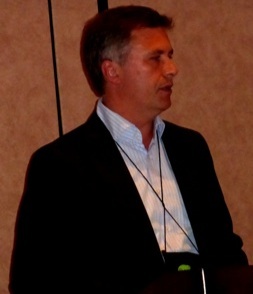
When Attachmate bought Novell in 2010, they spun SUSE off into an independent business unit. Since then SUSE has been growing at a record rate, according to SUSE’s President and General Manager, Nils Brauckmann, who will speak this week at the SUSE Linux Conference. As a whole, SUSE’s revenue has grown 22 percent over last year, and the most growth has been in North America, with an increase of 37 percent. SUSE now has over 19,000 customers in 45 countries.
The product with the most growth is SUSE Manager, SUSE’s heterogenous systems manager, which grew 140 percent. Brauckmann today announced the release of a new management pack for SUSE Manager, the Management Pack for Microsoft System Center. This provides a single central console for managing Windows and Linux servers: updates, patches, virtual and physical environments.
Brauckmann also announced an increase in the SUSE life cycle from 7 + 3 (seven years of support plus an optional three-year extension) to 10 + 3 to meet the needs of enterprise customers who need stable platforms with long life cycles.
Interoperability is a core SUSE strategy, and the good SUSE people claim that SUSE Cloud, which is based on OpenStack, offers the best heterogenous systems support, and supports more hypervisors than any other enterprise cloud.
SUSE is one of the oldest Linux distributions, and turned 21 this year.
Editor’s Note: Carla Schroder is attending SUSECon, which is taking place Nov. 12 – 15 in Lake Buena Vista, Florida. She will be reporting from the conference throughout the week for Linux.com, courtesy of SUSE.
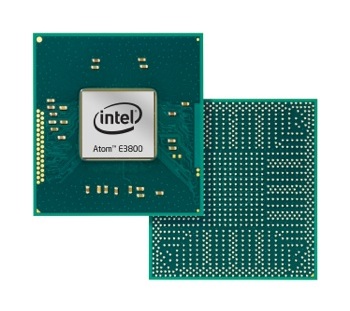
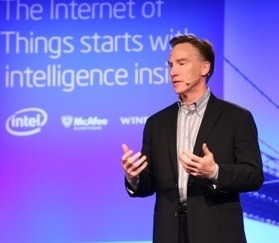
Last month, Intel announced a new family of Internet of Things (IoT) gateways, as well as new Quark and Atom E3800 processors that will run them. Now the chipmaker has unveiled a new IoT Solutions Group that combines its Intelligent Systems Group with resources from subsidiary Wind River. Led by Intel VP and GM Doug Davis, the division will report directly to CEO Brian Krzanich.
The IoT Solutions Group will integrate “intelligent systems hardware, software, services and platform elements” into one organization, says Intel. Despite the growing IoT focus, Wind River’s business of selling embedded Linux, Android, and VxWorks development platforms will continue as usual, says Wind River SVP Jim Douglas. So will its cross-architecture support, he adds. Although Wind River’s Linux-based Intelligent Device Platform, which incorporates security software from its sister subsidiary McAfee, will be bundled with Intel’s upcoming gateway hardware, it will also be available separately for ARM and other platforms.
Most of the Big Data cloud applications required to process Internet of Things data are already in place, says Douglas. What’s needed now is what Wind River and its owner Intel are developing with their new IoT gateways: a “fog” platform that sits closer to where the action is. “We need edge management that aggregates data from embedded devices and connects them to the cloud,” says Douglas.
The new division will give the embedded team the prominence to make that happen, says Douglas. Embedded has often been an afterthought at Intel, but as the desktop PC business shrinks, Intel is looking to expand into the field, as well as to embedded mobile devices running Android. IoT is attractive since it involves oversight of connected devices running Intel’s embedded processors with cloud-based software running on Intel-based servers.
“Embedded has become a very substantial and profitable part of Intel’s business, but Intel hasn’t done a great job telling that story,” says Douglas. “This announcement is an endorsement of the growing role of embedded and IoT.”
IoT has been a buzzword for years, but the concept has reached a tipping point in recent months. Earlier this year, Cisco announced a major IoT initiative focused primarily on the enterprise side. Meanwhile, other tech firms have begun rolling out frameworks and software aimed at the IoT market. A few that involve Linux or Android include Ayla Networks’ Android focused Ayla Platform and Echelon’s Izot stack, which will initially run on a Raspberry Pi.
In many ways, IoT is just another name for low-cost Internet-ready embedded devices. These power-efficient devices are often used to aggegate sensor data on the network’s edge. They’re increasingly configured for machine-to-machine (M2M) applications, communicating with other IoT devices without human interaction.
IoT is progressing as more devices gain IP addresses and communications capability – typically using wireless technologies like WiFi or ZigBee. IDC projects that by 2020 there will be 26 times more Internet-connected “things” than connected people. Meanwhile, Gartner says IoT will represent $1.9 trillion dollars in economic value by 2020.
The most compelling IoT applications are factory automation, transportation, energy, and smart buildings, says Douglas. Here, IoT gateways connected with Big Data software can “unlock current assets, turn data into information, and help make better decisions,” he says. “The idea is to observe the performance of sensors and other embedded devices, then predict that performance, and potentially change it. It should lead to less downtime, more sustainable and efficient operations, and optimized performance.”
Wearables, medical devices, and connected refrigerators are coming, but first there are “huge economic gains” to be found in more basic infrastructure. “IoT is the next big shiny thing, and there’s a lot of excitement about sexy areas like wearables, but for now the big opportunities are found in the old boring industries,” Douglas says.
Intel’s two-tier IoT Push: Quark and Atom e3800
Intel’s IoT initiative took off in early September with the unveiling of the Quark processor. Each single-core, single-thread Quark measures one-fifth the size and is claimed to use one-tenth of the power of the new “Silvermont” based “Bay Trail” Atom cores. Aimed squarely at IoT, the first of these Pentium ISA compatible chips — the Quark X1000 — will begin sampling soon and reach production in early 2014.
Quark’s Linux support was clarified in early October when Intel announced an Arduino-compatible, Quark X1000-based single-board computer called the Galileo. The board is supported with an open source Linux OS that includes Arduino software libraries. A lightweight version of Linux is standard, but there’s also a more robust flavor available for SD-ready devices.
In October, Intel also announced the embedded version of its latest Atom chips. Intel’s Atom E3800 (Bay Trail-I) processors are fabricated with the same 22nm, Tri-Gate Silvermont architecture as the tablet-focused Atom Z3000, but offers even lower 5-10 Watt consumption. Intel is promoting the E3800 and Quark as the two-tier foundation for its new IoT gateways.
The intelligent gateways, which incorporate Wind River Intelligent Device Platform software, are designed to aggregate, filter, and share data “from the edge to the cloud,” says Intel. Early customers include smart grid vendor Westfalen Weser Energie, and HVAC vendor Daikin Applied. Daikin is using both Quark and Atom E3800 based gateways for remote HVAC diagnostics, monitoring and control, and energy management.
Wind River’s Intelligent Device Platform, based on its Yocto Project compliant Wind River Linux, includes gateway security and support for wireless and remote device management protocols, including the MQTT M2M protocol. It also provides support for Lua, Java, and OSGi application environments.
The Intel gateways running the software will mostly run on Quark processors at the edge, as well as on Atom E3800 for gateways with more substantial processing requirements. The Atom models, as well as future Intel Core based models, will aggregate data from edge gateways before communicating with cloud-based software. The initial push will be for so-called “Brownfield” deployments where legacy devices running Linux or VxWorks are fitted with wireless capability, but still need help in aggregating data for the cloud, says Douglas.
“That’s why we launched on Linux first,” he adds. “The higher end devices that can feed into the gateway tend to run Linux, where you have the benefits of open source software and connectivity elements.”
IoT can pay off by reducing the cost of remote device monitoring while improving the analytics around that data, says Douglas. In an offshore wind farm, for example, gateways on each row of windmills could aggregate data and send it to the cloud without the cost of sending out a boat or a helicopter, he adds.
ARM wakes up to IoT
Douglas sees a mid-range gap in the current IoT market that Intel can exploit. Companies like Cisco, GE, and IBM are leaders on the high-end enterprise side of IoT, while ARM microcontrollers tend to dominate on the low end. With the Quark and Atom, “You can have more processing at the edge, so you can capture an aggregate of the data and push it to the cloud,” says Douglas.
ARM has yet to unveil a comprehensive IoT strategy, but it recently released an IoT white paper [PDF] with The Economist featuring results from a global survey of business executives. Some 75 percent of businesses were said to be actively looking into IoT, and 94 percent of respondents said IoT would have a major impact within three years. Linux-ready ARM processors that might be described as IoT ready include ARM9 cores, such as those found in Atmel’s SAM9 processors. Lately, ARM is increasingly pushing Cortex-A5 at the higher end of the IoT spectrum.
ARM’s biggest IoT play, however, is with its popular Cortex-M microcontrollers, and to a lesser extent, its Cortex-R chips. These typically run real-time operating systems (RTOSes), or no OS at all. Yet, as the demand for more intelligence and Internet support seeps down into low-power edge devices, Linux is in increasing demand as well.
In late October, ARM announced an embedded version of its ARMv8 architecture that will add virtualization and Linux support to a new generation of Cortex-R processors. The ARMv8-R architecture is 32-bit, yet it borrows features such as hardware virtualization from the 64-bit ARMv8-A found in new Cortex-A53 and -57 processors.
ARMv8-R provides a more sophisticated memory processor unit than found on today’s Cortex-R chips. Together with virtualization and other enhancements, this should enable devices like automotive computers to run safety-critical embedded applications that combine RTOSes, bare metal code, and Linux and Android runtimes on a single processor. As with Cortex-M, Cortex-R currently supports only the very minimalist uClinux, but the next generation should support Linux and Android distros with full GUIs, albeit in lightweight versions.
While Linux may still play second fiddle to RTOSes on the Cortex-R, it appears to be the primary OS for Quark, which should also support other RTOSes like VxWorks. Intel has a long way to catch up with ARM on the low end, but its Quark may well fulfill a Linux-ready sweet spot for embedded IoT devices between ARM’s microcontrollers and its Cortex-A processors.
Last week was OpenStack Summit in Hong Kong, and there were enough big headlines to suggest that OpenStack is going to remain one of the biggest technology stories going as we enter 2014. Canonical announced that it will meld OpenStack with Cloud Foundry within Ubuntu, and Red Hat made a series of announcements furthering its commitment to the cloud platform.
In conjunction with the Summit, the OpenStack Foundation has released the results of a broad users survey it did, with an accompanying infographic. You might be surprised at what users are doing with OpenStack.
This purple star map is our best guess at the shape of the universe at half its current age, according to a new simulation from a research team at Argonne National Lab. The project is called the Hardware/Hybrid Accelerated Cosmology Code (HACC), an attempt to use supercomputers to model the intricate physics of mass in an expanding universe. The project tracks roughly 1.1 trillion particles as they expand and cohere, nearly four times larger than the scale of previous simulations. The hope is that by understanding the patterns of matter in the universe, cosmologists can track down the dark matter that experts estimate composes roughly 25 percent of our universe.
Courtesy of J. Insley and the HACC Team at Argonne National Laboratory
Linux kernel support for NVIDIA’s Tegra 4 ARM platform have been around for nearly one year but only with the Linux 3.13 kernel is this latest-generation high-performance ARM Cortex-A15 based solution going to be supported by the mainline Linux kernel…
An important aspect of administering a CentOS server is to understand its package management system and its various online repositories. Together they ensure you are always running a secure and updated server.
CentOS uses the Yellow Dog Updater, Modified (yum) package manager to install and update software packages in RPM format from online software repositories. With yum, in addition to downloading and installing new packages, you can also check for available updates and fetch information about available packages.
Last week I provided some new NVIDIA GeForce Team Fortress 2 benchmarks for Valve’s popular Team Fortress 2 game and those Linux benchmark results were followed by 9-Way AMD Radeon Linux results for this Source Engine game. Now for starting off a new week is just not new benchmark results but a Counter-Strike: Source test profile for benchmarking…
The Linux Foundation became a sponsor for the FOSS Outreach Program for Women earlier this year, choosing seven interns to hack on the Linux kernelfrom June through September. And, the results are in: the intern group ranked among the largest contributors to Linux kernel 3.12.

 He applied for a training scholarship for the same reason he is a Linux Foundation individual member: to help improve his system administration skills and to be more involved in the open source community. As a scholarship winner in the “SysAdmin Super Star” category, announced earlier this year, he also plans to share his new knowledge within his company.
 When Attachmate bought Novell in 2010, they spun SUSE off into an independent business unit. Since then SUSE has been growing at a record rate, according to SUSE’s President and General Manager, Nils Brauckmann, who will speak this week at the
  Most of the Big Data cloud applications required to process Internet of Things data are already in place, says Douglas. What’s needed now is what Wind River and its owner Intel are developing with their new IoT gateways: a “fog” platform that sits closer to where the action is. “We need edge management that aggregates data from embedded devices and connects them to the cloud,” says Douglas.
 The intelligent gateways, which incorporate Wind River Intelligent Device Platform software, are designed to aggregate, filter, and share data “from the edge to the cloud,” says Intel. Early customers include smart grid vendor Westfalen Weser Energie, and HVAC vendor Daikin Applied. Daikin is using both Quark and Atom E3800 based gateways for remote HVAC diagnostics, monitoring and control, and energy management.
  Last week was OpenStack Summit in Hong Kong, and there were enough big headlines to suggest that OpenStack is going to remain one of the biggest technology stories going as we enter 2014. Canonical