
 Superb Mini Server (SMS) 2.0.2, another minor update of the Slackware-based server distribution, has been released: “Superb Mini Server version 2.0.2 released (Linux kernel 3.2.35). This is a bug-fix and security release, featuring security enhancements, packages upgrades, new features and the latest 3.2.x branch kernel. Superb Mini Server (SMS) 2.0.2, another minor update of the Slackware-based server distribution, has been released: “Superb Mini Server version 2.0.2 released (Linux kernel 3.2.35). This is a bug-fix and security release, featuring security enhancements, packages upgrades, new features and the latest 3.2.x branch kernel. In this release….Read more at DistroWatch
Distribution Release: Superb Mini Server 2.0.2
Debian Project News – December 10th, 2012

------------------------------------------------------------------------
The Debian Project                                http://www.debian.org/
Debian Project News                    debian-publicitylists.debian.org
December 10th, 2012       http://www.debian.org/News/weekly/2012/24/
------------------------------------------------------------------------
Welcome to this year's twentyfourth issue of DPN, the newsletter for the
Debian community. Topics covered in this issue include:
  * Record number of participants for Mini DebConf Paris
  * Debian on smartphones: a feasibility analysis
  * Official Debian images on Amazon Web Services
  * Reports from latest BSPs
  Record number of participants for Mini DebConf Paris
---------------------------------------------------
Read more at Debian Weekly News
$299 version of Acer’s C7 Chromebook kind of defeats the purpose
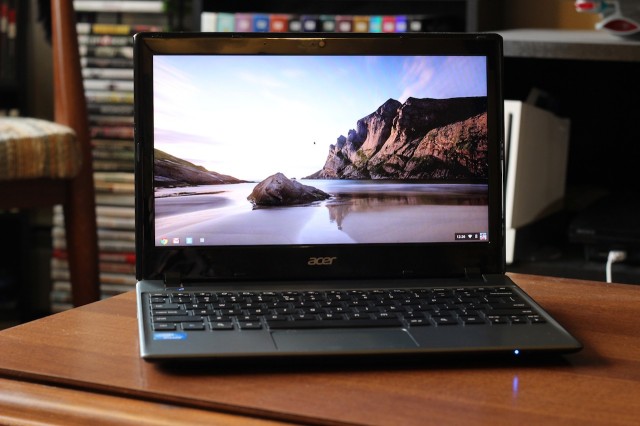 hen we reviewed Acer’s $199 C7 Chromebook, we didn’t think it was perfect, but we were willing to overlook many minor flaws in the face of its $199 asking price. Today, Slashgear unearthed an upgraded model—there’s an Acer product page that lists a $299 version of the C7 with a larger battery, 4GB of RAM instead of 2GB, and a 500GB hard drive instead of a 320GB model.
Of these three upgraded specs, there’s only one that really impacts the core features of a Chromebook: the battery. Indeed, the four-ish hour battery life was one of the worst things about the C7, and this boosted model promises about six hours instead. However, neither the RAM nor the hard drive will really benefit Chrome OS…Read more at Ars Technica
FSFE: European Parliament adopts unitary patent
 The Free Software Foundation Europe reports that the European Parliament has adopted a proposal to create a patent with unitary effect for Europe. “This decision will leave Europe with a patent system that is both deeply flawed and prone to overreach. It also ends democratic control of Europe’s innovation policy.” The proposal still needs to be ratified before it will take effect. “According to the European Parliament’s website, “the international agreement creating a unified patent court will enter into force on 1 January 2014 or after thirteen contracting states ratify it, provided that UK, France and Germany are among them.” Read more at LWN
6 Linux Distros Born in 2012
Variety and choice have long been hallmarks of the Linux world, not least because new distributions emerge practically every day.
That’s been just as true in 2012 as it has in other years gone by, meaning that as this year draws to a close, we have even more options than we did when it started.
More than 30 new distros joined our sphere in rapid succession thanks just to the “31 Flavors of Fun” experiment in August, but there were also several notable arrivals that come to light over the course of the year with the potential to make a lasting mark.
Without further ado, then, here are six compelling new Linux distros that were born in 2012.
1. SolusOS
Aiming to offer a fresh alternative to the mobile-inspired environments that increasingly dominate the desktop landscape, SolusOS is a beginner-friendly Debian-based distro that features a GNOME 3 fork designed to look and behave just like the old familiar GNOME 2 so many of us have come to know and love.
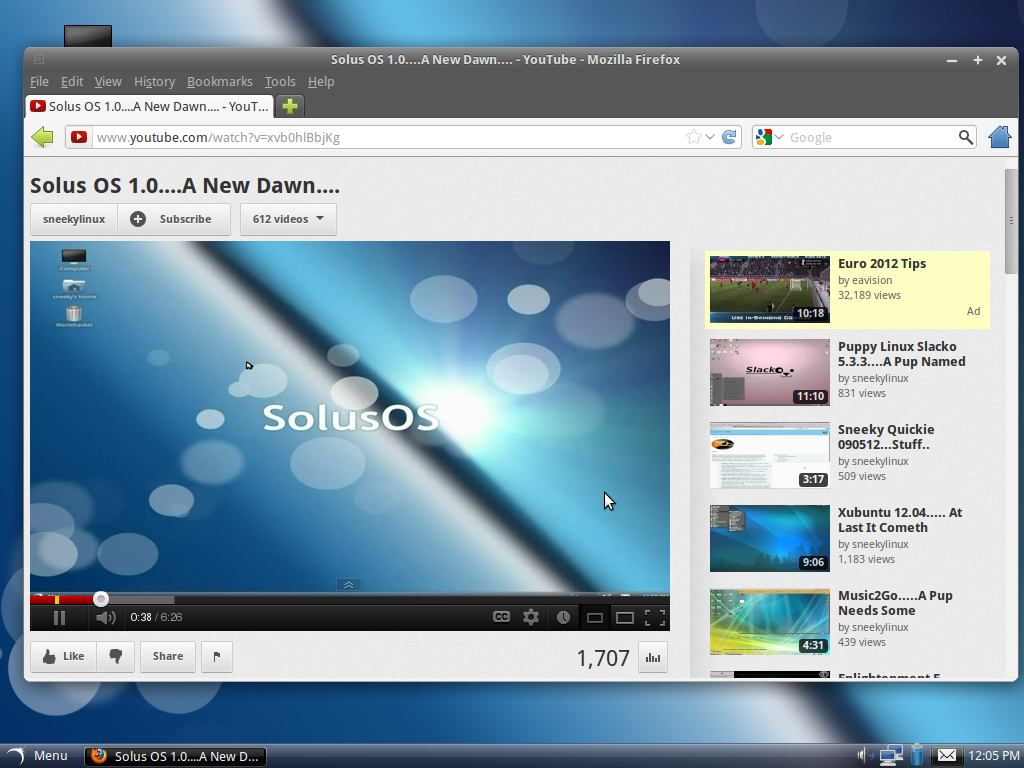
“It works out of the box with great support for all your modern day computing needs including word processing, audio/video playback and editing, file sharing, and more,” the project team explains.
A video on YouTube offers a nice taste of SolusOS’s general look and feel. You can download version 1.2 of the software as a free 1GB .iso file from the project site.
2. Linux Lite
Also targeting beginners is Linux Lite, an Ubuntu-based distribution that’s aimed at newcomers to Linux, in particular.
First launched in October, Linux Lite has now reached version 1.0.2 and is based on Long Term Support (LTS) release Ubuntu Linux 12.04 “Precise Pangolin.” It offers five years of support along with the lightweight Xfce 4.8 desktop.
Code-named “Amethyst,” the software is now offered as a free download on Sourceforge.
3. Cinnarch
Then, too, there’s Cinnarch, a distro that aims to provide “a modern, elegant and powerful operating system based on one of the best Linux distributions out there, Arch Linux, and featuring the popular Cinnamon desktop environment,” in the project’s own words.
The first Cinnarch .iso image was uploaded in May, but in late November the project officially entered beta. You can download the software for free from the project site.
4. Bedrock Linux
Bedrock Linux, meanwhile, was created to make “most of the (often seemingly mutually exclusive) benefits of various other Linux distributions available simultaneously and transparently,” as its creators put it.
Specifically, “Bedrock Linux uniquely manipulates the filesytem and PATH to allow software from various other Linux distributions to coexist as though they were all from the same single, cohesive Linux distribution,” they explain. “With Bedrock Linux, for example, one could have an RSS feed reader from Arch Linux’s AUR open a webpage in a Web browser from Ubuntu’s repos while both of them are running in an X11 server from Fedora.”
In other words, Bedrock hopes to offer the best of many Linux worlds, all wrapped together in a single, new Linux distribution. A video on YouTube aims to provide a more vivid sense of what that means.
Released in August, the second alpha of Bedrock Linux, named “Momo,” is now available from the project site.
5. Qubes
As for Qubes OS, it’s a security-oriented, Fedora-based desktop Linux distro whose first official version was launched in September. Based on Xen, X Window System, and Linux, Qubes can run most Linux applications and use most Linux drivers.
Qubes Release 2 is currently in the works; it will also support Windows-based AppVMs. The current version of the software is now available as a free download.
6. Raspbian
Last but not least, it’s also worth mentioning Raspbian, the new Debian-based Linux distro that’s optimized for the Raspberry Pi. Bundled with more than 35,000 packages, the software is now officially available from the Raspberry Pi Foundation and available for download from its site.
There were, of course, many other intriguing arrivals in the Linux world over the past year, not to mention events such as the rebirth of Damn Small Linux, the death of Dreamlinux, and the appearance on the horizon of even more distros that are yet just a twinkle in their creators’ eyes.
What will the upcoming year bring? Check back regularly to find out.
Swiss City Mandates Use Of Open Source, Banishes Microsoft Officially
 In an overwhelming majority vote, the city council in Bern, Switzerland has moved to implement all future infrastructure with open source technologies.  The “Party Motionâ€, as it is called in Switzerland, was submitted over a year ago, and has finally been realized.  Plans to move forward with open source design, strategy and implementation should begin immediately.
The party motion called for the following bullet-points. Â These have been translated via Google Translate from German, so please consider that as you read them.
Development of an open source development strategy provides for that as a rule in all future procurements operating system and browser-independent solutions are chosen, will be announced in public tenders as product and vendor neutral and explicitly open source solutions are accepted with equivalent functional properties and similar cost….Read more at The Powerbase
Samba 4 delivers free software Active Directory support
 After ten years of work and six years after the last major release, the developers of the Samba team have announced the release of Samba 4.0, the latest version of the free software implementation of the Server Message Block (SMB) protocol. Samba 4 introduces long-awaited support for Microsoft’s Active Directory technology by implementing a combination of an LDAP directory server, a Heimdal Kerberos authentication server, a Dynamic DNS service (via its own DNS server or a BIND plugin) and all the needed remote procedure calls to fulfil the function of an Active Directory Domain Controller for all currently supported versions of Microsoft Windows, including Windows 8.
Samba 4 can provide Group Policies, Roaming Profiles and other features to administer systems in a Windows domain as well as integrate with Exchange servers and compatible open source alternatives. Samba’s support for Active Directory is completely transparent to clients which means that a Samba-based Domain Controller can be integrated into existing Active Directory domains. To help with a smooth migration…Read more at The H
Most Popular Linux Downloads and Posts of 2012
 We tacked some great Linux subjects this year, from building home servers to finding the perfect Linux distribution and even fixing some Ubuntu annoyances. Here’s a look back at our top Linux downloads and posts from 2012 (with a little FreeBSD thrown in for fun).
Create a Kickass, Seamless, Play-Everything Media Center: The Complete Guide
DVD players are so 1999. In this day and age, a custom media center running XBMC is the only thing you really need hooked up to your TV-whether you’re watching movies you’ve ripped, streaming your favorite TV shows from Netflix and Hulu, or even playing video games.

Turn an Old Computer into a Networked Backup, Streaming, or Torrenting Machine with Ubuntu
You’ve heard the word “server” thrown around a lot, but usually in the context of web sites or big companies that have a lot of data to store. In reality, a server can be…Read more at Lifehacker