Home Blog Page 684

OpenStack Summit, Barcelona: Your Guide to the Event

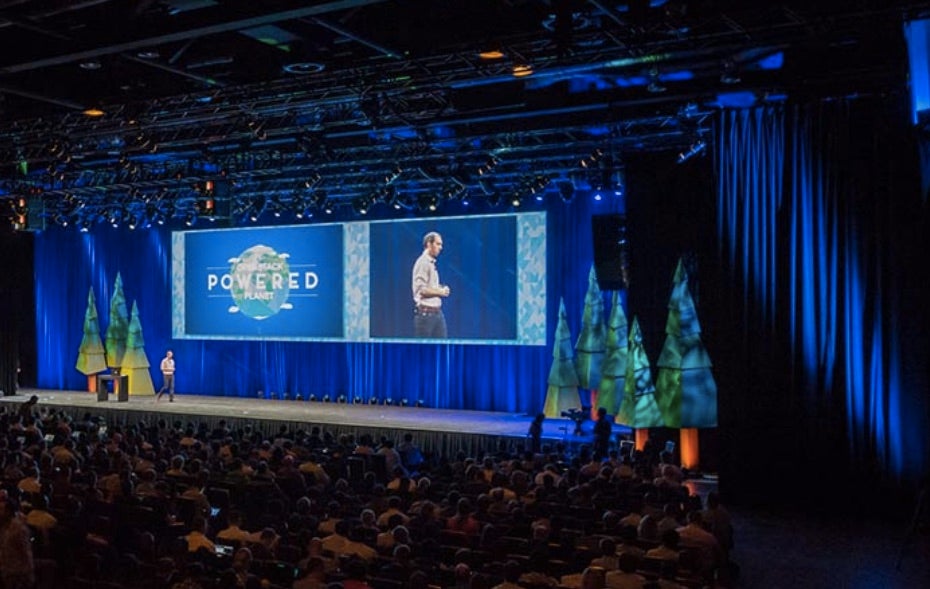
The OpenStack Summit event in Barcelona is only days away, and you can still register. According to the OpenStack Foundation, approximately 6,000 attendees from 50+ countries are expected to attend the conference, taking place Oct. 25 – 28 in Barcelona.

This event is a bi-annual gathering of OpenStack community members, technology leaders, developers and ecosystem supporters. Each year one summit event is held in North America and then one additional event rotates between Asia and Europe. Barcelona already has a packed schedule, and here is what you can expect from the event.

The Schedule and Ideas for Attendees. All of the goings on in Barcelona are rounded up in a detailed schedule, available here. There is also a detailed guide to Barcelona published on the summit’s site, available here. It even delves into where to find the best brunch.

Speakers. The roster of speakers for OpenStack Summit is impressive. The speakers include the OpenStack Foundation’s COO Mark Collier and its Executive Director Jonathan Bryce. Also speaking are OpenStack leaders from CERN, China Mobile, Comcast, Deutsche Telekom, Google, Mesosphere, Telefonica, the United States Army, Verizon, Walmart, and many more organizations. You can find all the keynotes and other addresses here.

There are also “Women of OpenStack” addresses and breakfasts slated for each day at the event.

Announcements and News. There are always many new products and initiative announcements at OpenStack Summit. For example, at last April’s event in Texas, Red Hat announced a slew of new OpenStack projects and deployments it was supporting. Representatives from Red Hat, Canonical, IBM, HP, and many other companies focused on OpenStack are attending the summit.

In Barcelona, you can definitely expect to see many new products and initiatives focused on Newton, the 14th official release of OpenStack. Newton improves the user experience for container cluster management and networking, and addresses scalability and resiliency. OpenStack Foundation members and company representatives have announced that they will be demonstrating these capabilities in Barcelona.

As the announcement of Newton noted: “These new capabilities address more use cases for organizations with heterogeneous environments, who are looking for speed and better developer experience with new technologies like containers, alongside workloads that require virtual machines or higher availability architectures.”

Contributor Recognition Tracks. Contributors are a big part of what has driven OpenStack’s success, and as the OpenStack Summit approaches, there are several plans for recognizing project contributors, ranging from coders to those who don’t code.

“Traditionally, OpenStack has been focused on the people who contribute code,” Maish Saidel-Keesing recently told Opensource.com. “But OpenStack has grown, it has evolved and changed, and it became quite apparent that there are many people who are contributing to community—but they are not writing code. This is an Active User Contributor.” You can review the criteria for being recognized as an Active User Contributor here.

Saidel-Keesing and working group members are presenting a session at in Barcelona on Tuesday at 12:15 focused on recognizing OpenStack contributors who don’t necessarily code. Meanwhile, a special round of community awards will be handed out by the OpenStack Foundation at the summit. Awards will be presented during the feedback session on Friday at the summit. Previous winners have received awards with very campy titles, including the “Don’t Stop Believin’ Cup” and the “Duct Tape Medal.” You can find out more about these awards and contribute submissions here.  

Sessions. There are some notable sessions taking place in Barcelona, including industry-specific ones. For example, speakers from the telecom industry are running a session on orchestration options for NFV and OpenStack, with details here. What percentage of players in the telecom industry now consider the OpenStack platform to be essential or important to their success?  According to a survey commissioned by the OpenStack Foundation, a whopping 85.8 percent of them do. There are numerous telecom-focused events going on in Barcelona.

Among other notable sessions, the following stand out as opportunities to learn from leaders in the OpenStack space:

Mirantis One-Day Training: Introduction to Kubernetes and Docker – 11:25 a.m. on Wednesday – hosted by Mirantis

IBM: The Open Cloud, A Platform of Opportunities – 12:15 on Wednesday – hosted by IBM

OpenStack Performance Team: The Newton Cycle – 9:50 on Thursday – hosted by the OpenStack Performance Team

Decentralized DevOps with Masterless Puppet and OpenStack Datacenter Automation – 11:00 on Thursday – Multiple Hosts

OpenStack Charms – 9:50 on Friday – Multiple Hosts

Additionally, the folks at vBrownBag are hosting a series of tech talk sessions at OpenStack Summit. The group has a YouTube channel here, and has promised to upload videos of the tech talks as they take place. A good way to keep up with these is to follow this Tech Talk Live page as the summit progresses. There are sessions scheduled on building data centers around OpenStack, and scaling an OpenStack deployment, among others.

There are also brown bag tech sessions coming from Veritas, on the topic of software-defined storage. Storage management and support for enterprise production workloads is becoming critical for many enterprises running OpenStack. The Veritas brown bag sessions are summarized here, and include a session on highly available storage for OpenStack deployments that serve multi-site data centers, and a session on moving data between OpenStack and other cloud platforms. Meanwhile, PLUMgrid is also showcasing software-defined storage at the summit, with more information found here.

Stay tuned for more OpenStack coverage as the event approaches and news from the conference.

Network Topology Guide for the Internet of Things

A network topology is how computers, printers and other devices are connected, and describes the layout of wires, devices and routing paths on a network. When referring to topology through the lens of IoT, it is how sensors, actuators and gateways communicate with one another. There are a number of common topologies, point to point, bus, ring, star and mesh., some of which are better suited for the internet of things than others:

Point-to-Point Network

A point-to-point network establishes a direct connection between two network nodes, according to O’Reilly’s Radar. Communication can take place only between these two nodes, or devices. An example of this type of network is a Bluetooth link between a cell phone and an ear piece. The advantages of point-to-point networking are its simplicity and low cost. The primary limitations spring from the one-to-one relationship that exists between two devices; the network cannot scale beyond these two nodes, therefore it is not a widely used topology for industrial IoT.


Read more at RCR Wireless News


JavaScript Grows Up and Gets Its Own Foundation

Currently, the JavaScript sector offers a mind-bogglingly diverse menu of open source options for building, testing and deploying applications. Maybe too diverse. With this in mind, The Linux Foundation has launched the JavaScript Foundation, an entity “committed to creating a center of gravity within the exponentially expanding JS ecosystem,” according to the organization.

The foundation aims to help wrangle a bit of order from the chaos while making sure open source contributors feel valued and included. More formally stated, the foundation’s  goal is to “drive broad adoption of key JavaScript solutions while facilitating collaboration within the JavaScript development community to ensure those projects maintain the quality and diverse contribution bases that provide for long-term sustainability.”

Read more at The New Stack

Mesosphere Embeds Marathon Container Orchestration in DC/OS

While Marathon may not draw as much attention these days as other container orchestration technologies, work surrounding the platform continues. With the latest version of the DC/OS platform from Mesosphere, the Marathon container orchestration engine now comes baked in.

Tal Broda, vice president of engineering for Mesosphere, says with version 1.8 of DC/OS via a new Services Feature the Marathon container orchestration engine can be more naturally invoked, with the same dashboard IT administrators employ to schedule jobs and perform other tasks. The end result is a more refined IT management experience.

Read more at Container Journal

Telemetry, An Essential Part of any Cloud-Native App

Why telemetry, a new factor in app development, can mean the difference between success and failure in the cloud.

This is an excerpt from Kevin Hoffman’s free ebook, “Beyond the Twelve-Factor App.” Download the full ebook here.

In Beyond the Twelve-Factor App, I present a new set of guidelines that builds on Heroku’s original 12 factors and reflects today’s best practices for building cloud-native applications. I have changed the order of some to indicate a deliberate sense of priority, and added factors such as telemetry, security, and the concept of “API first” that should be considerations for any application that will be running in the cloud. These new 15-factor guidelines are:…

Read more at O’Reilly

GPG Sync Simplifies Encryption Key Management

Open source project GPG Sync makes it easier for organizations already using GPG to encrypt email messages to manage different user keys.

In all the discussion about using encryption, a critical point keeps getting lost: It’s difficult to work with, and it’s even harder to deploy it at scale. Nowhere is the challenge more evident than in sending secure email.

There are many ways to interact and collaborate — instant messaging, Slack, and so on — but email still dominates in enterprises. Even as encryption goes mainstream with secure messaging tools, more websites adopting HTTPS by default, and cloud storage services allowing easier file encryption, sending an encrypted email message is still a challenge.

Read more at InfoWorld

Demonstrating the Future of IoT

Yesterday was a special day. It would be a nightmare day for most tech executive. I was a keynote speaker for OpenIoT Europe / Embedded Linux Conference from The Linux Foundation and was asked to demo IoT in front of more than a thousand [potentially multiple thousands] experts. If there is one thing software companies don’t do enough, it is sending their executives to demo their new products. I survived and it went quite well. This blog post will run through my demos but also explain how each is just a building block towards a software defined future in which home, business and industrial IoT will redefine our future. My code is on Github and where possible I will give instructions to do the demo yourself.

The first thing to understand is that we are living in a world where yesteryear’s supercomputers are available today for $10 and lower. The first Raspberry Pi was $25. The Raspberry Pi Zero is now $5. But the NanoPi Neo is $10 and includes Ethernet unlike the Zero. The Chip includes WiFi and Bluetooth for $9. They also just launched a Chip Pro for $16 for production usage.

AAEAAQAAAAAAAAlQAAAAJDVkY2I3MDE4LTY0NWMt

Clearly this trend is just starting. The Chip Pro is a good example of how the maker community is just a jumping board towards the professionals market. Likely two or three boards will emerge that will cost over time below $5, even $1, and can be put on top of breakout boards for anybody looking to integrate everything from Ethernet, sensors, Modbus, 4G, and many more. So in a world where a supercomputer costs mere dollars, any type of device will have one, e.g. hairdryers, toothbrushes, alarm clocks, and everything else that is relatively dumb around us today.

How will we manage hundreds of smart devices around us?

We can go two ways: the Apple way or the open way. The Apple way will be closed ecosystems that only work with devices from the same manufacturer. Although this might work in a world with Apple TV, iPhone, iPod, iPad, and so on. Realistically even in the home you have a Google Nest, a Sonos, an Amazon Echo, a Philips Hue that aren’t from the same supplier. So for IoT to be successful we need an open way in which competing products can communicate together. How is this done today? Most suppliers have some proprietary cloud service that allows other devices to talk to yours. So we are still in a world of isolated and walled garden connected things.

Our proposal is different. What if you can put apps on devices and allow software to define and redefine the purpose of a device? How does this work? Let’s focus on the first demo. Connecting a temperature sensor to the cloud. For my demos I used an excellent open source product made originally by IBM called NodeRed.org. Thanks to our open source apps on device concept, called Snap, you can now easily install NodeRed on any Snappy device via: sudo snap install nodered. If you want to create an alternative list of modules, go to Github, clone the project, and call snapcraft to get an alternative snap you can either upload again to the store [snapcraft push], or deploy directly [sudo snap install nodered_….snap –force-dangerous].

AAEAAQAAAAAAAAdEAAAAJGY2OGEwMmJkLTc2YTAt

Here you can see how an Arduino node gets temperature data from the Arduino and puts it into a statistics node. Every 3 seconds the mean temperature is calculated based on information that is no older than 30 seconds. The switch function allows you to put a minimum temperature before you share the data. By connecting the switch function to the IBM IoT Device node and clicking Deploy, you are able to send the data from the Arduino to the IBM Cloud. It is really easy to get a real time graph. Try it yourself, you just need to copy one quickstart ID from the IBM IoT Device node to the quickstart page in the cloud. However, how do you get the information from the Arduino or any other micro-controller or sensor in the first place? Here is the code to read data from an Arduino connected via USB [clone, run snapcraft, sudo snap install …]. On the Arduino you need to run some code to push the data to the serial interface. Any Arduino starter kit will explain you how to do this. My Snap reads the data and puts it into a local MQTT topic. MQTT is a standard which is often used for IoT when you have lots of sensors communicating small quantities of data. To get a local MQTT server running just do sudo snap install mosquitto. By following a simple topic naming schema: sensor/arduino/in, you can now connect from NodeRed to the Arduino temperature data feed.

One thing you might have noticed is that the data was not send directly from the sensor to the cloud. Why? The data was read every 0.5 seconds. By just accidentally touching the sensor you would get a spike. Via aggregation and taking a mean you can avoid this. This is one of the reasons why you want to have a smart edge device that does local analytics. Another reason is that lots of sensors are quite chatty. You can easily have 10-100 sensors in even the most simple industrial equipment. Sensors can read data every second but often every tenth or hundreds of a second. Start multiplying this data feed by 100s of sensors on millions of devices and you can easily see why we are creating a data tsunami of almost useless data. Edge analytics allows you to only share data with the cloud when it is relevant.

This article originally appeared on LinkedIn.

Vim Tips and Tricks That You Probably Never Heard Of

The most common file editor in Linux is Vim. Even if there is no other editor installed in the system, you can still use it in its most basic form, Vi and Vim are similar in many ways, with the exception that Vim (VI IMproved) was later developed and adjusted to the more modern Linux systems.

The following article lists useful Vim tips and tricks that you have probably never heard of.

Vim is a very feature-full editor offering a plethora of options for all sorts of uses. Very often due to its complexity many people find it frustrating to begin with in the first place. However, once you begin to grasp its way of working, you will begin to realize that the options and features it offers are so unique that no other editor today can replace it.

Useful Vim Editor Plugins for Software Developers – Part 2: Syntastic

There’s no doubt that Vim is a capable programming editor out-of-the-box, but it’s the editor’s plugins that help you make the most out of it. In the first part of this article series, we discussed a couple of programing-related Vim plugins (Tagbar and delimitMate). Continuing on the same path, in this article, we will discuss another useful Vim plugin aimed at software developers – Syntastic.

Read complete article

The Ops Identity Crisis

A big theme in the keynotes and conversation during Velocity Conf in NYC a few weeks ago was the role of ops in an “ops-less” and “server-less” world. It’s also been a big feature in discussions on twitter and in conversations I’ve had with coworkers and friends in the industry.

There are several things that stand out to me in these conversations: first, that some ops engineers (sysadmins, techops, devops, and SREs) are worried that they will be phased out if developers and software engineers are responsible for the operational tasks in their systems; second, that developers and software engineers do not have the skills needed to take over responsibility for operational tasks; and third, that building reliable systems is impossible without an operations organization. 

Read more at Susan J. Fowler