Like any other FOSS project OpenStack too needs a lot of volunteers in many domains apart from developing the software.
The Rumored HTC One Mini Makes a Great Companion to a Small Tablet
More details of the rumored HTC One Mini appeared yesterday. Samsung is releasing the Galaxy S4 Mini and I wonder if we are starting to see a trend towards smaller smartphones.
‘Can’t Innovate Anymore, My Ass’: Apple’s Bravado Clouds the Company’s Real Challenges

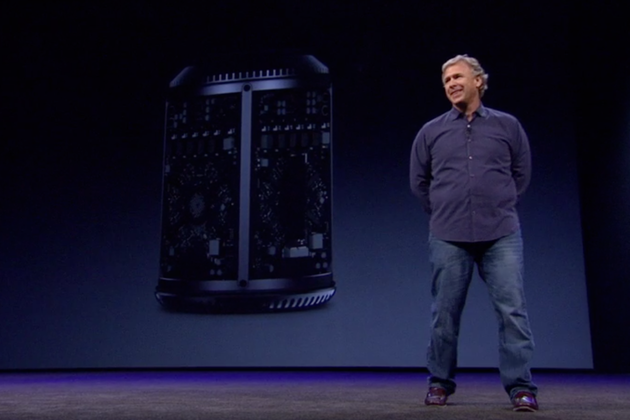
Apple’s Phil Schiller is among the smoothest and best-rehearsed executives in the technology business, and his typical presentation demeanor is that of someone enthusiastically reading a press release about the best summer vacation ever. But Schiller’s segment of Apple’s WWDC keynote on Monday took on an interesting, more aggressive tone as he introduced the Mac Pro. “Can’t innovate anymore, my ass,” he said — a line directed not at his audience of sympathetic Apple developers, but at the nattering nabobs of negativism that have accumulated at the base of Apple’s sliding stock price. Criticize this, Schiller seemed to be saying, as the imposing all-black Mac Pro stood on the screen behind him.
And the new Mac Pro is indeed…
Acer’s Android Smart Display Pushes Desktop Boundaries
Acer’s Smart Display DA220HQL is a 21.5-inch all-in-one touchscreen released earlier this year that runs the Android operating system with a wireless keyboard and mouse and has the potential to change your desktop computing habits. I have adjusted my file handling and computing routines to adapt to mobile devices that run Android rather than a traditional Linux desktop. Now, having a large-screen Android-powered desktop computer poses new computing challenges.
Red Hat Updates Virtualisation and OpenStack Products
The new Red Hat Enterprise Virtualisation 3.2 offers improved dynamic network configuration and Storage Live Migration features as well as a plugin framework. The Red Hat Cloud Infrastructure aims to make it easier to get started with OpenStack.
CentOS System Administration Using Text-Based User Interfaces
Administering CentOS 6 from the command line is not always intuitive and easy, especially when it comes to complex commands with hard-to-remember arguments and strict syntax. Many CentOS servers lack an X Window System graphical interface, which supports applications that could ease administration tasks. They can, however, run text-based user interfaces (TUI), which are often in the form of wizards, and which provide options for navigation, accept text input, and show progress bars.
CentOS has plenty of TUIs available from the official CentOS repository. For instance, system-config-network-tui helps you configure the CentOS network. This powerful Python script saves you the burden of editing numerous files to modify your network interfaces, routes, and DNS information. Similarly, system-config-firewall-tui helps you configure your firewall. It offers basic options to just allow incoming services, such as DNS and FTP, and more advanced options to fine-tune the iptables rules, such as configuring trusted interfaces and masquerading.
Read more at Wazi
Google App Engine Gets Git Push Support
Google has added the ability to push application changes to the cloud using Git and are previewing the updated Search API and Cloud Storage Client Library for the App Engine Platform-as-a-Service.
Make it Easy to Contribute by Making the Software Easy to Test

Question: How do you get more developers to contribute to a free and open source software project? Contribution is the lifeblood of a FOSS community Without contributions the community can’t grow beyond the initial project founders. People don’t just show up ready to work. They very likely start as users, even of the fledgling software before it really starts to take shape as the robust solution it could become.
Let’s approach the question of getting more developers involved as “software engineers” instead of as “community organizers” by asking a different question: Why do we use software versioning a.k.a. software configuration management tools?
Mandriva Releases Pulse2 1.4.2 With Additional Features and Improved Stability
Paris, the 13th of June 2013: Mandriva announces the immediate availability of its most recent release of Pulse2, the leading Open Source I.T. infrastructure management software.
With this new release (Pulse2 1.4.2) Mandriva has added specific new features that extend the capabilities of its professional solution as well as an important number of bug fixes.
As such, Mandriva Pulse2 1.4.2 may be considered the most stable version of Pulse2. As part of its extended capability, Pulse now offers enhanced inventory features from PXE and the ability to update the inventory fields directly from Pulse, the journaling of VNC accesses, new and specific menus for Wake-on-Lan capability and the integration of antivirus notifications.
Apple Looking at 5.7-inch iPhone, Claims Report
Apple is considering iPhones as large as 5.7 inches to match product offerings from Samsung, says Reuters. [Read more]![]()