Home Blog Page 865

Schneier: We’re Sleepwalking Towards Digital Disaster…

RSA 2016: Security guru Bruce Schneier has issued a stark warning to the RSA 2016 conference â€“ get smart or face a whole world of trouble. The level of interconnectedness of the world’s technology is increasing daily, he said, and is becoming a world-sized web – which he acknowledged was a horrible term – made up of sensors, distributed computers, cloud systems, mobile, and autonomous data processing units. And no one is quite sure where it is all heading.

“The world-sized web will change everything,” he said. “It will cause more real-world consequences, has fewer off switches, and gives more power to the powerful. It’s less being designed than created and it’s coming with no forethought or planning. And most people are unaware that it’s coming.”

Read more at The Register

Bitcoin’s Nightmare Scenario Has Come to Pass

The network’s capacity to process transactions has maxed out. Over the last year and a half a number of prominent voices in the Bitcoin community have been warning that the system needed to make fundamental changes to its core software code to avoid being overwhelmed by the continued growth of Bitcoin transactions. There was strong disagreement within the community, however, about how to solve this problem, or if the problem would ever materialize.

This week the dire predictions came to pass, as the network reached its capacity, causing transactions around the world to be massively delayed, and in some cases to fail completely. The average time to confirm a transaction has ballooned from 10 minutes to 43 minutes. Users are left confused and shops that once accepted Bitcoin are dropping out.

Read more at The Verge

Ready for Open SDN? OpenDaylight at ONS 2016

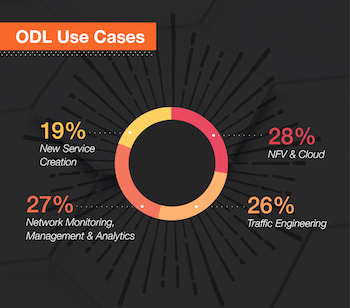
OpenDaylight Infographic v3 smallIn the past few years, the networking industry has made great strides toward building software-defined networks and in particular, open source SDNs. We’ve gone from tire-kicking to proofs-of-concept to the broad end user adoption we see today.

OpenDaylight (ODL) was introduced 33 months ago and is now 600+ developers strong. The platform has been integrated into dozens of solutions and used by organizations spanning telcos, enterprises, and research, and more recently finance and energy as shown in a recent survey. We also just announced that Beryllium – the community’s fourth release – is now available for download.

While SDN use cases continue to evolve, one thing has remained constant: organizations are seeking a single, common platform that they can build their networks around long-term. This will take years to materialize but signs are pointing in the right direction. In addition to community, solutions and adoption, another sign of a healthy and growing platform is an app ecosystem which is already beginning to form around OpenDaylight.

We invite you to join us at Open Networking Summit for the OpenDaylight Mini Summit on Monday, March 14 (free with event registration). We’ll cover topics including how OpenDaylight is being used in production, hands-on tutorials with the latest release, working with code for new and advanced users, and more.

You can also catch the ONS Webinar “OpenDaylight: Beryllium Technical Deep Dive” happening today, March 3, at 11:30 a.m. PST. Register here.

Join OpenDaylight at Open Networking Summit, March 14-17 in Santa Clara, CA.

Melissa Logan is Head of Marketing at OpenDaylight, a Linux Foundation Collaborative Project.

Shashlik Brings Android Apps to Linux, and You Can Try It Today

At its core, Android is just Linux. But Android provides a runtime and various other libraries that applications depend on, so you can’t just install Android apps on Linux and expect them to work. Open-source project Shashlik is attempting to bridge the gap, and now offers a preview release that can run many Android applications on Linux today.

Essentially, Shashlik runs Android in the background on your Linux system. (Shashlik developers are working on stripping down Android as much as possible.) OpenGL and graphics code are rendered directly on your Linux system for speed, but Shashlik provides an Android activity manager, daemons, and intents so Android apps will work properly.

Read more at PCWorld


4 No-Bull Takeaways About Docker Cloud

Multicloud app delivery service Docker Cloud means a lot for users, the company, and their ecosystem.

Late last year, Docker snapped up cross-cloud container management service Tutum, but it wasn’t clear how the acquired company’s handiwork would manifest under the Docker brand. Earlier this week, we found out: Tutum reemerged as Docker Cloud amid little fanfare, but with more than only the badges swapped on the product. Cloud now cross-integrates with all of Docker’s other services, and Docker promises to unveil more features for shortly.

The significance of Docker Cloud resides is more than the feature set alone. Here are four other reasons why Docker Cloud is a bigger deal than its low-key release might suggest.

Read more at InfoWorld

Top 5 Open Source Shells for Linux

terminal blue smoke command line 0There are two kinds of Linux users: the cautious and the adventurous. On one side is the user who almost reflexively tries out ever new option which hits the scene. They’ve tried handfuls of window managers, dozens of distributions, and every new desktop widget they can find.

On the other side is the user who finds something they like and sticks with it. They tend to like their distribution’s defaults. If they’re passionate about a text editor, it’s whichever one they mastered first.

Read more at OpenSource.com

Infographic: Internet of Things Generates ROI for Many, But Roadblocks Remain

iotinfographic02252016In the latest survey by Tech Pro Research, 68% of enterprise IoT users reported at least some return on investment.

Less than a quarter of respondents to the latest Tech Pro Research survey said their company is currently using IoT-connected devices to collect data, but more respondents said their business plans to get into the IoT game within the next year. Respondents in those two groups reported a wide variety of uses for data insights, including predicting trends, improving products, capacity planning, R&D and security.

Read more at TechRepublic

How to Configure and Manage Network Connections Using ‘nmcli’ Tool

As a Linux administrator you’ve got various tools to use in order to configure your network connections, such as: nmtui, your NetworkManager with GNOME graphical user interface and of course nmcli (network manager command line tool).

configure network connections using nmcli tool in linux

Navigating OPNFV’s Brahmaputra Release

opnfv brahmaputra infographic final 2 0-1This week, we celebrate the second OPNFV platform release: Brahmaputra. I am so proud of the entire OPNFV community who have come together to create this incredibly rich and diverse experience that marks significant progress toward a deployable open source platform for NFV. It’s our first full experience with a massively parallel simultaneous release process and demonstrates that we can meet the complex challenge of collaborating upstream to advance the ecosystem. (Learn more about Brahmaputra here: www.opnfv.org/brahmaputra)

Brahmaputra software delivers enhanced testing capabilities (system and performance), new deployment and integration scenarios (weaving in new controllers and installers), improved automation of our continuous integration and continuous deployment toolchain, and last (but not least) many new carrier-grade features (such as IPv6, VPN configuration, fault detection, resource reservation, and dataplane acceleration).

But what I’m most proud of is the growth and strength of our community: Systems integration is hard, requires diligent collaboration, and is essential in our march toward NFV viability. It’s been said before, but bears repeating: the strength of any open source project depends on the community involved in developing it.

What we’ve seen with Brahmaputra is key stakeholders collaborating across the industry and a marked increase in community engagement overall. For example, 35 projects were involved in the Brahmaputra release, compared to just five in Arno. That’s a six-fold increase in just ten months! Even more telling is the more than 140 developers involved in the release—which means we’ve seen developer participation in OPNFV as a whole increase five-fold since August of 2015.

But at the same time, so much of what we do is upstream collaboration, which has also grown in size and impact with Brahmaputra. A great deal of the effort going on behind the scenes is in working with other communities, including KVM, OVS, OpenStack, Linux kernel, OpenDaylight Project, ONOS, Open Contrail, ETSI, and IETF. If you think about how many developers across all these various organizations have contributed to the release, it’s a feat that could only be achieved through open source development.

Brahmaputra represents a significant milestone in project maturity. It’s now “lab-ready,” which means it provides a viable starting point for evolving NFV use cases (such as SFC and L3VPN) and composing services in an actual lab environment. It brings improvements to platform-level testing and project infrastructure, including framework and documentation updates that set the stage for further development of the platform, but also scenarios that can be tested now.

Brahmaputra’s continuous integration mechanisms provide a stable framework for deploying and testing new use cases across the extensive Pharos community labs, which played a pivotal role in the development of Brahmaputra as they were used for release validation along with the OPNFV bare metal lab hosted by the Linux Foundation.

OPNFV releases are centered around scenarios, i.e., compositions of components and their configuration as well as associated installation, integration and testing. Brahmaputra will deliver the entire set of deployment scenarios incrementally, with additional scenarios becoming available in a set of release editions as they achieve stability. Moving forward, we’ll continue to improve the platform tooling, enhance testing capabilities, and work with upstream communities to introduce new features.

I encourage you to get involved! Today you can download OPNFV Brahmaputra and if you’re a developer, join the mailing lists or weekly Technical Steering Committee (TSC) calls to help shape the direction of OPNFV. We’ll be hosting our first plugfest the week of May 9th at at the CableLabs headquarters in Louisville, CO, which will provide a great opportunity to collaborate and test interoperability of different products with the Brahmaputra release.

Comments from OPNFV Brahmaputra Developers

“I am proud of the Brahmaputra release for its lab-readiness–we will be able to develop innovative applications, experiment with new use cases and demonstrate the interoperability of the platform. I am particularly proud of the IPv6 feature in OPNFV, which extends the current capabilities of the Neutron Router and the ODL L3 Router to any VM that is managed by OPNFV and acts as an IPv6 vRouter. Thus, it allows flexible service design, provisioning and deployment on OPNFV.” – Bin Hu

“This release includes the results of the NFV feature development pipeline, which start from the real operator requirements and go through code development in the relevant upstream projects towards a reliable NFV platform, powered by open collaboration.” – Ryota Mibu, NEC/Doctor Lead

chris 0About the author: Chris Price leads open source industry collaboration for Ericsson in the areas of NFV, Cloud & SDN from the CTO’s office in Sweden and is an active member of the technical steering comitee’s of the OpenDaylight and OPNFV Projects.  Chris’ experiences include leading Ericssons’ IP&Broadband network architecture and standardization teams with a rich history in development of systems and technology in the areas of network management, policy control and user service management, user session control plane solutions, and DPI technologies.

Cloning Linux from a Bundle

tux-smallIf you find yourself on an unreliable Internet connection and need to perform a fresh clone of Linux.git, you may find it tricky to do so if your connection resets before you are able to complete the clone. There is currently no way to resume a git clone using git, but there is a neat trick you can use instead of cloning directly — using git bundle files.

Here is how you would do it.

  1. Start with “wget -c“, which tells wget to continue interrupted downloads. If your connection resets, just rerun the same command while in the same directory, and it will pick up where it left off:

    wget -c https://cdn.kernel.org/pub/scm/linux/kernel/git/torvalds/linux.git/clone.bundle
  2. Once the download is completed, verify that the bundle has downloaded correctly:

    git bundle verify clone.bundle
    ...
    clone.bundle is okay
    
  3. Next, clone from the bundle:

    git clone clone.bundle linux
    
  4. Now, point the origin to the live git repository and get the latest changes:

    cd linux
    git remote remove origin
    git remote add origin https://git.kernel.org/pub/scm/linux/kernel/git/torvalds/linux.git
    git pull origin master
    

Once this is done, you can delete the “clone.bundle” file, unless you think you will need to perform a fresh clone again in the future.

The “clone.bundle” files are generated weekly on Sunday, so they should contain most objects you need, even during kernel merge windows when there are lots of changes committed daily.